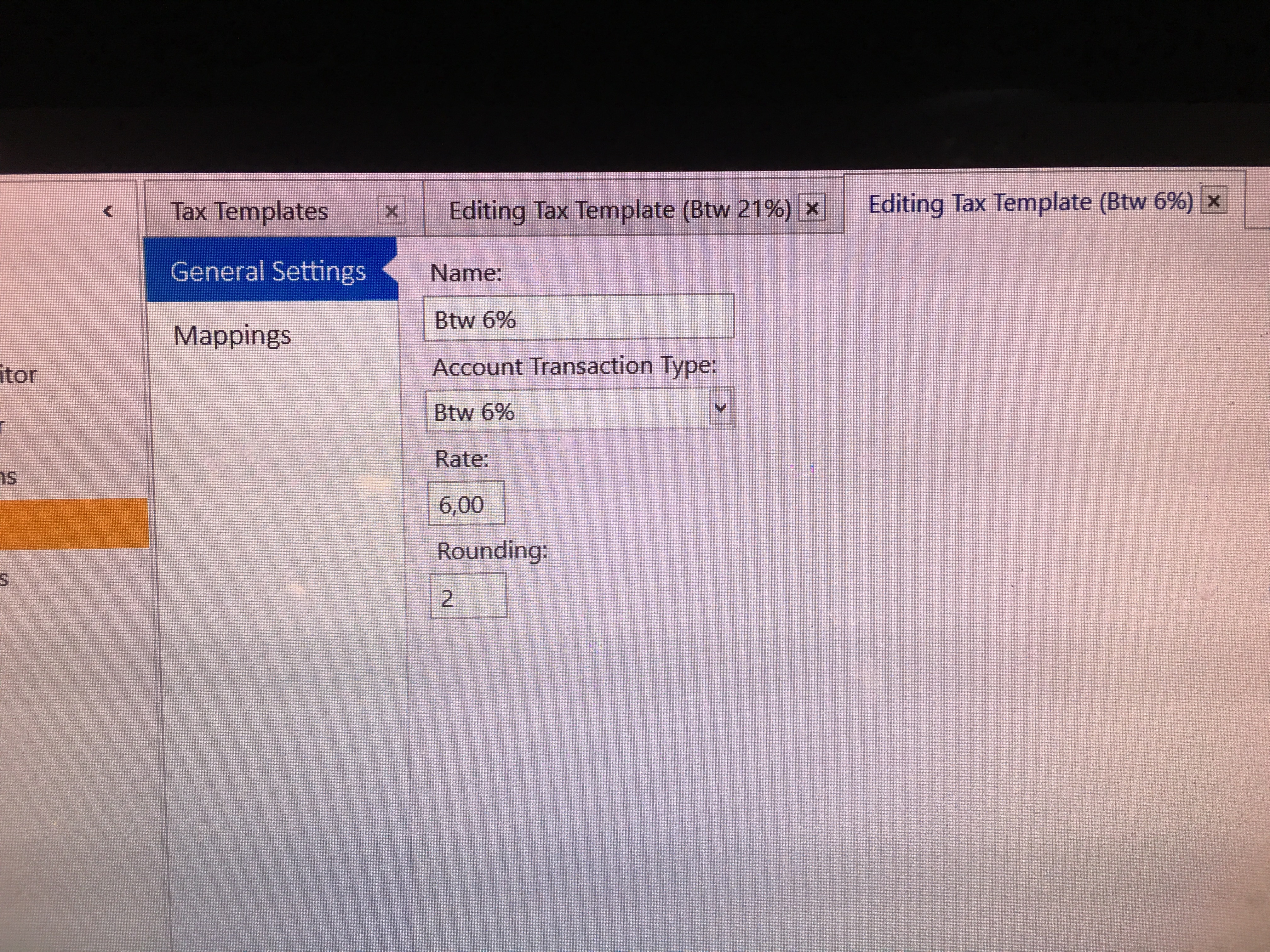
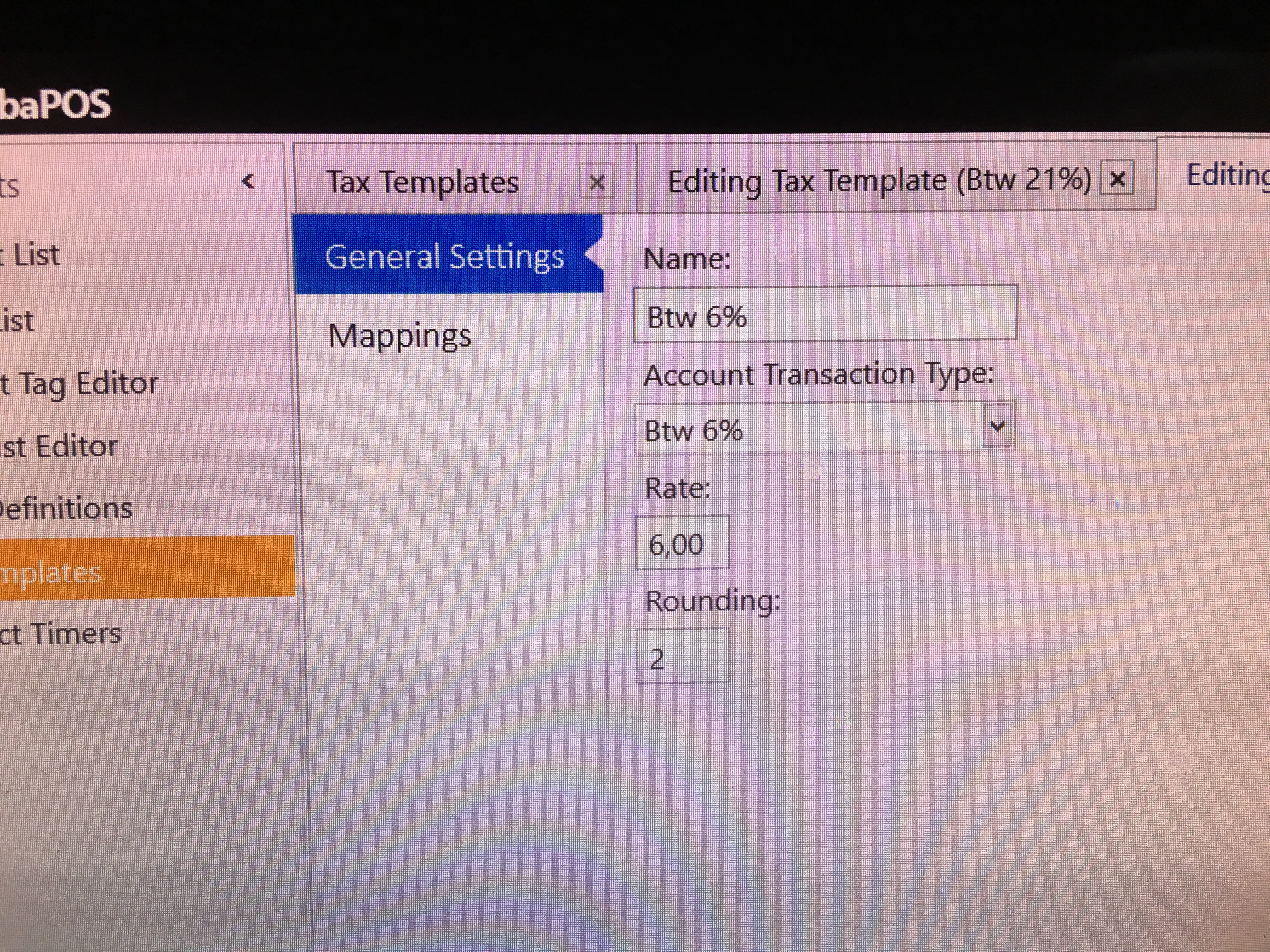
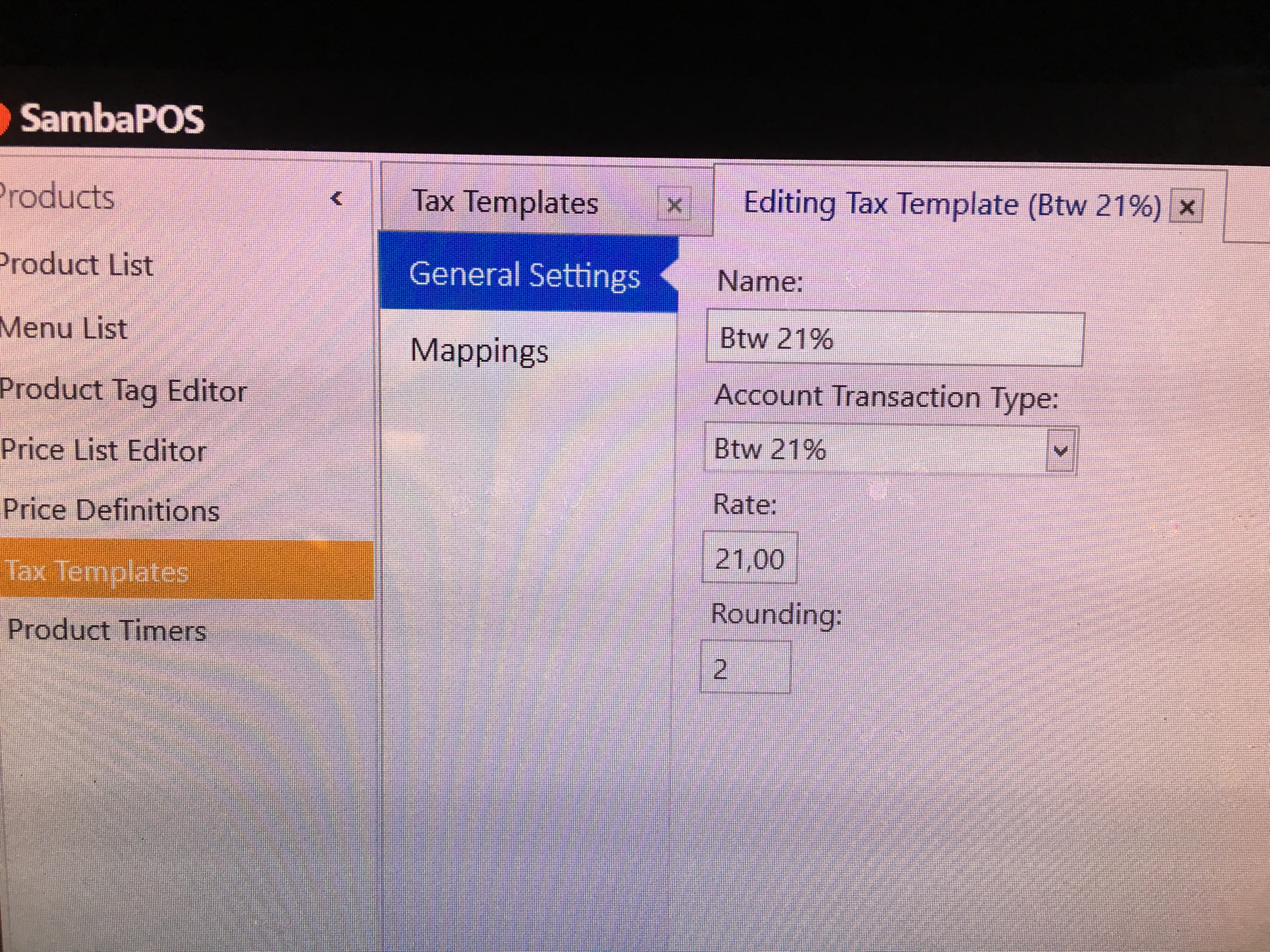
I have à question about tax calculation. Im using 2 kind of taxes, high 21% for alcoholic beverages, and 6% for non alcoholic beverages and food.
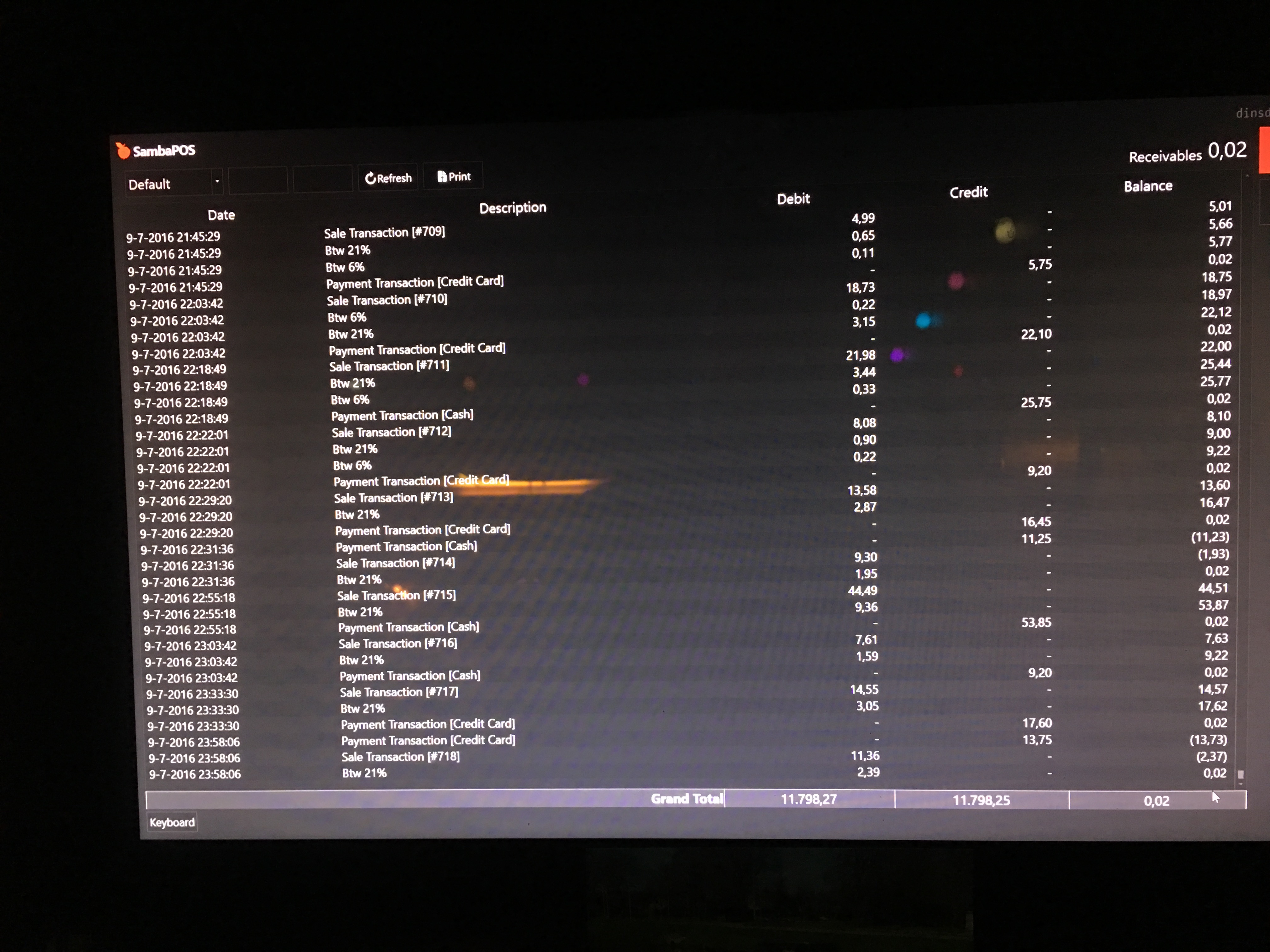
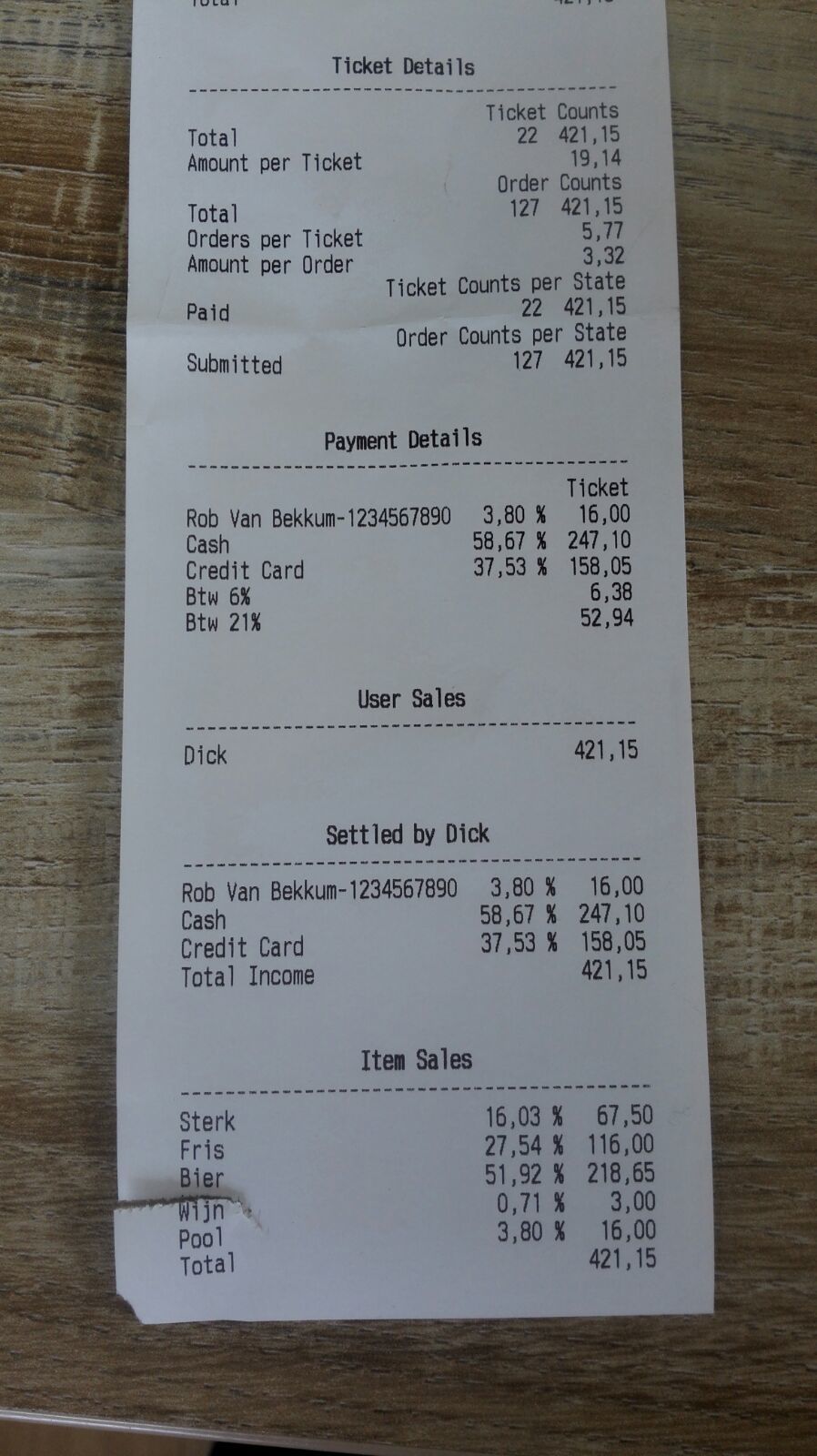
Here is a screenshot of my problem:
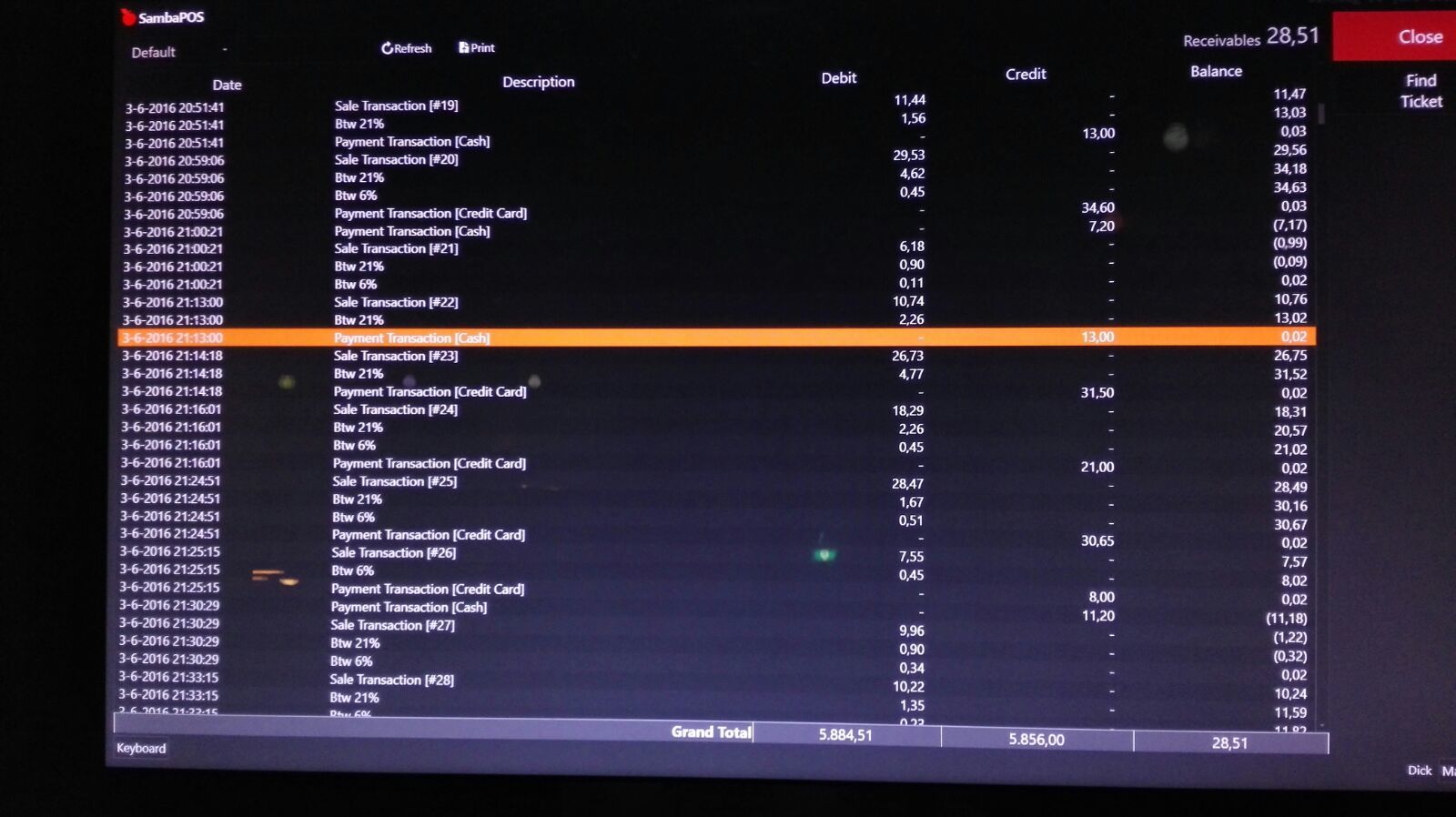
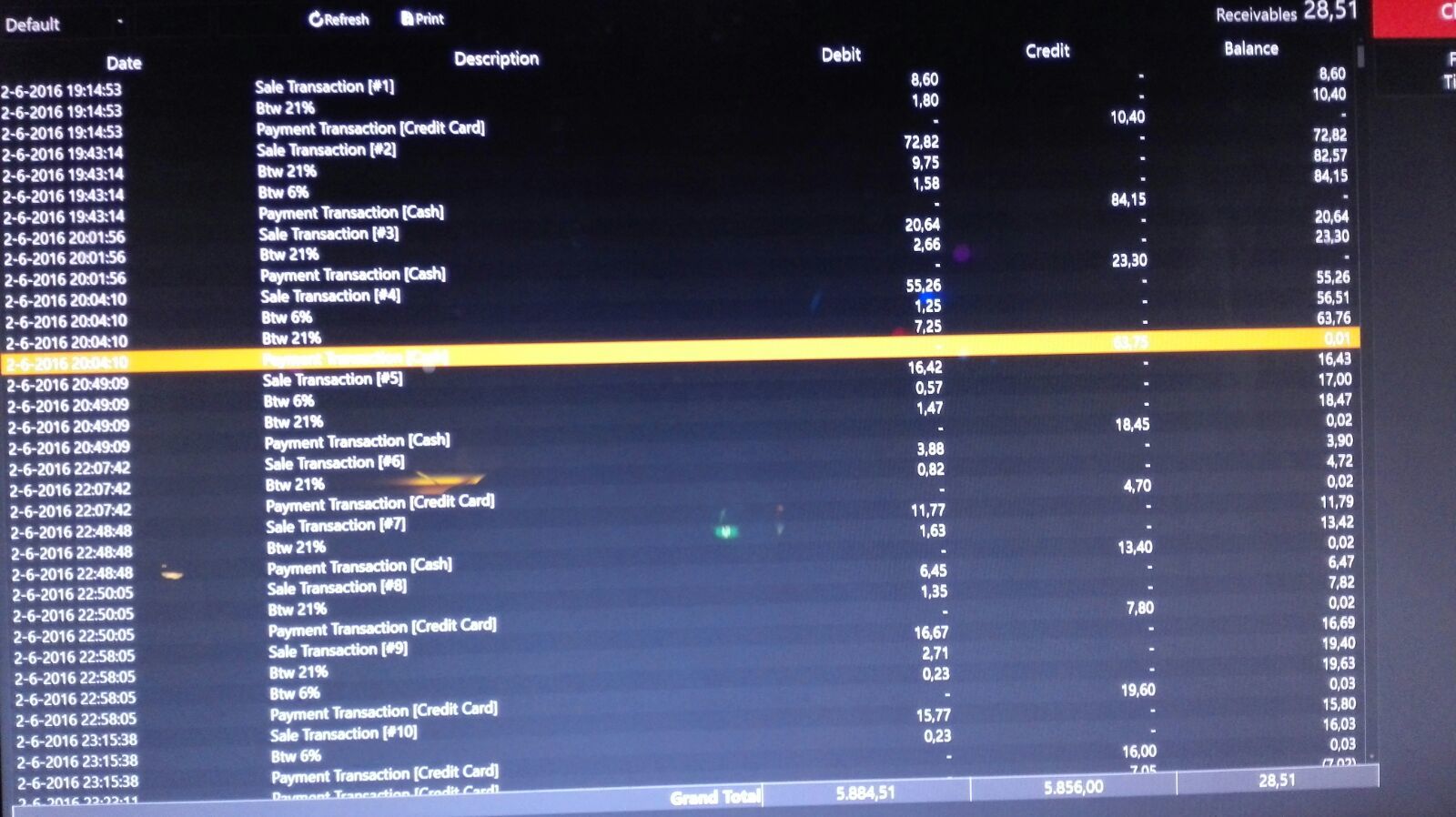
Several payments is 1 or 2 cents too much?
Testing it at the moment, looking good now.
Tnx for your help!
It wont fix past transactions. You need to create a reconcile account and move your balance there so you can start fresh.
Can you create a database backup and send me the zip file?
Hi Emre,
Here is the database file.
Database.zip (1.4 MB)
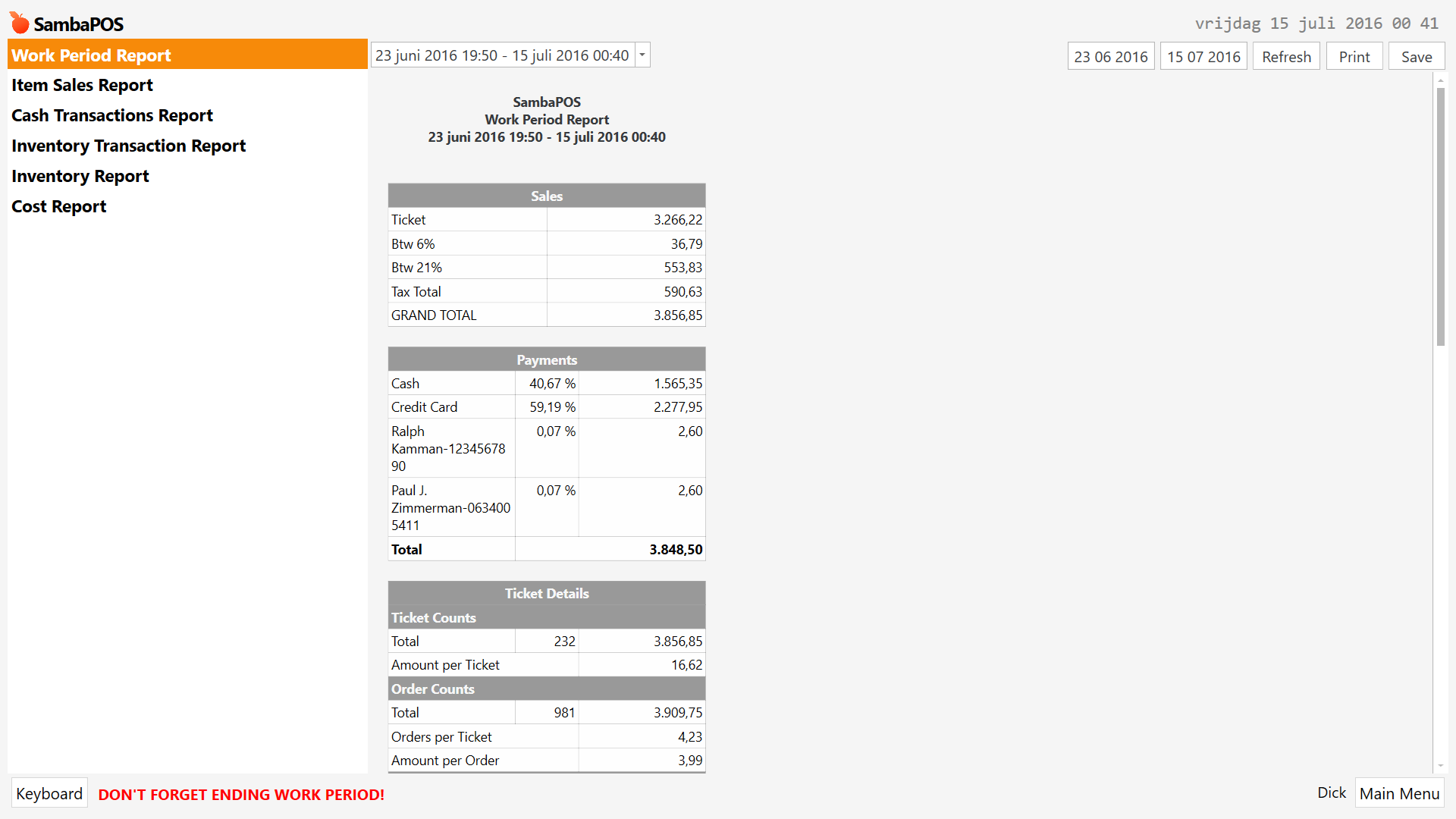
I have one other odd thing: When I’m making a report from the week, it also counts the unpaid customer accounts to total. But these accounts aren’t paid for yet, so it is not suposed to be calculated as sales in the total of the day/week, since the customer account isn’t settled yet.
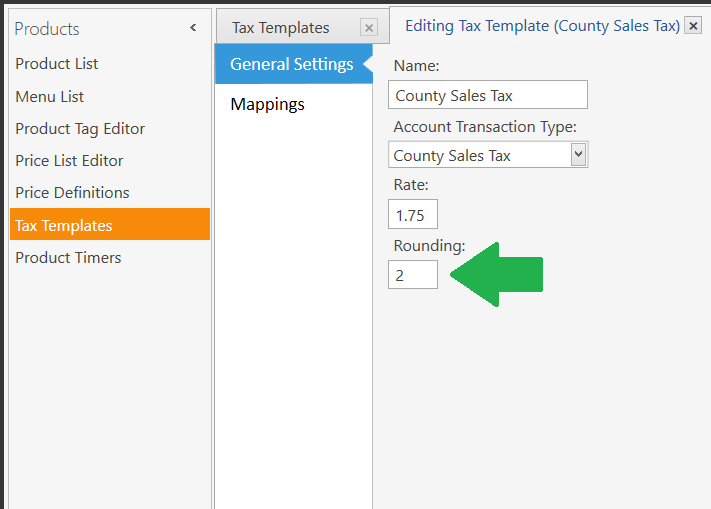
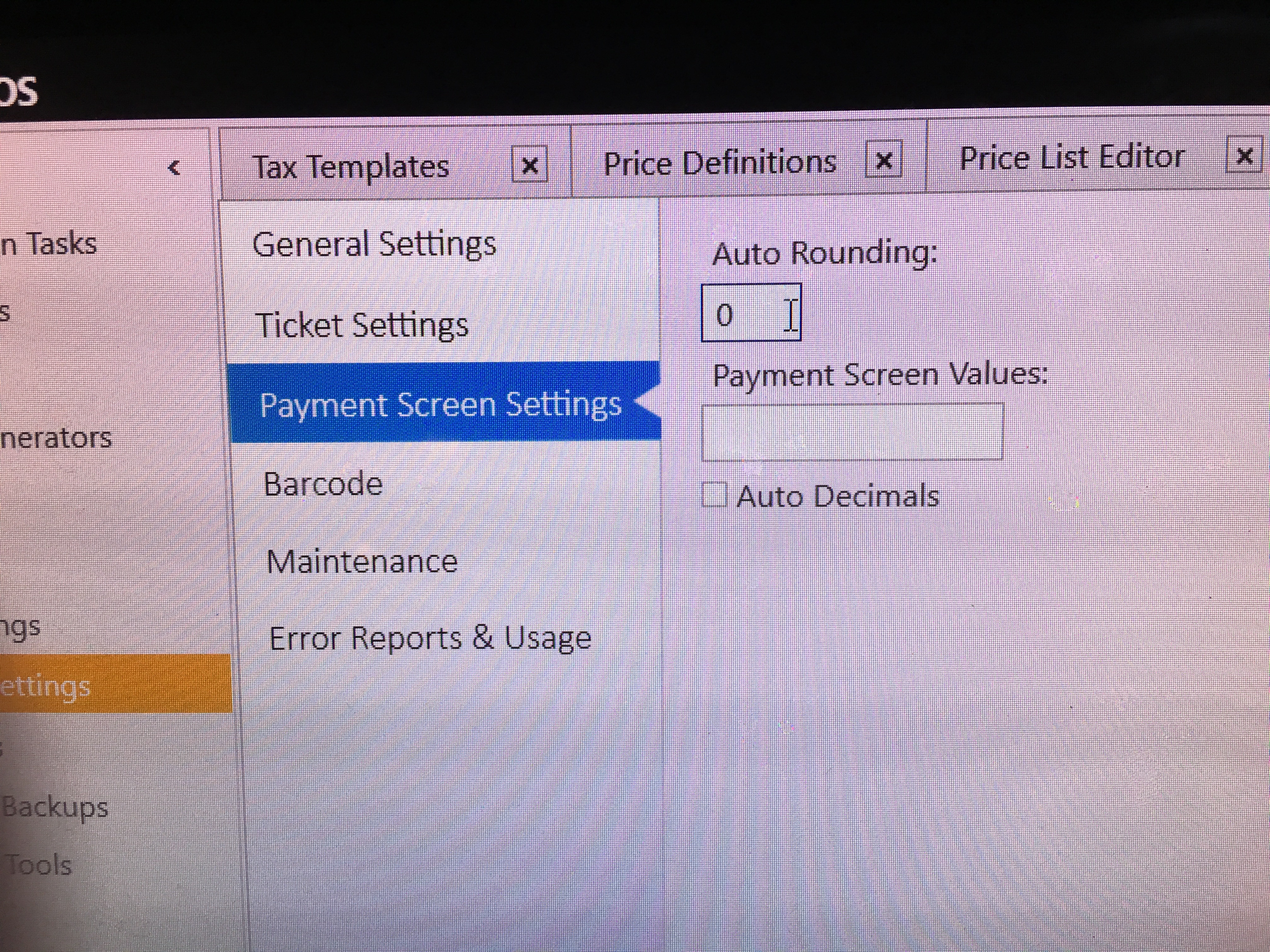
Hmm you have 2 tax types and the tax is included to prices? As both taxes rounded individually sum of them are different from total tax amount that calculated from ticket total. That won’t be more than ± 1 or 2 cents as you have 2 tax types. I’ll make it calculate total tax by rounding per tax template so that difference won’t happen on future tickets. That will be released with 5.1.61 update.
What you sold and what you collected are different things. They should tracked separately. Customer may pay it later or never pay it. That does not change what you sold.
What I mean is that the 16,00 euro from Customer account Rob Bekkum isalso in the total income, while it haven’t been cashed yet.
So if i wanted to void the ticket because the client run under a bus (worst case scenario) it is aready in the books and paid taxes over the amount. Wich makes a lot of paperwork to get that tax back. Now this is only 16,00 euro, but what if it is 200,- euro? And more tickets of that amount. That makes it alot of tax every 3 months to pay in advance. So basic solution than is to stop giving customers credit 
Sale and Payment are 2 different things.
Payment of a Sale by a Customer Account is still a Sale, and it is still Payment, even though you receive no “money” for that Sale.
I understand completely what you’re talking about, because my idea of “Income” means I have receive money for a Sale. This is why I look at transaction totals for things like
Cash
Credit Card
Those are Payment Accounts. A Customer Account is also a Payment Account. For that reason, you will want to add Cash and Credit Card, but exclude Customer Accounts. That will give you a “real on-hand Income”.
When a Customer pays his/her account, you receive the Cash (or Credit Card), but you don’t actually make a Sale. The Sale was made on a prior day, and you don’t know what Tax was collected unless you go find the Ticket for that Sale.
If you are worried about a Customer not paying their Account, then you may want to exclude all Sales paid by Customer Account on your Workperiod Report.
As soon as you sell something that registers as a sale. Customer may not pay it or maybe pay it with money or coconuts. Governments generally does not care what you collected and takes her tax from what you sold. Well your local rules might be different. You can edit your reports to your liking.
Yes, exactly. Think of a “Contra deal” or a “trade”. Is it a Sale? Yes. Is it Income? Perhaps, depending on how you want to look at it.
You sell a Beer and a Pizza and customer “pays” using their Customer Account.
At a later date/time (or maybe even a date/time before the Sale was made), you add Credit to that Customer Account for some reason:
No matter the scenario, the Sale was made, and that is usually the only thing the Government cares about. Payment was processed by Customer Account. Money may or may not change hands (Income or Payouts), but the Sale still occurred, and the Tax was calculated at that time.
So if I exclude customer accounts in the work period report, and customer pays 10 days later, wil it show up in the month overview?
On the end of the month, we make a work period report fom 1-7-2016 to 31-7-2016. Will the payments show up in the total balance, once paid?
Then thats what I need! Can you give me a headsup to an article where it is explained how to make a custom report?
You can modify payments section like that.
[Payments:2, 1, 2]
{REPORT PAYMENT DETAILS:P.Name,P.Amount.Percent,P.Amount.Sum:Payment.Amount > 0 and ((PT=Credit Card) or (PT=Cash))}
>Total|{REPORT PAYMENT DETAILS:P.Amount.Sum:Payment.Amount > 0}
>>Customer Payments
Cash||{ACCOUNT TRANSACTION TOTAL:Customer Cash Payment:Cash}
Credit Card||{ACCOUNT TRANSACTION TOTAL:Customer Credit Card Payment:Credit Card}
That will only display Cash and Credit Card payments. You can modify it for your needs and read more about it here https://sambapos.com/wiki/doku.php/custom_reporting
@Michiel_Visser while checking your setup I noticed you have an incomplete Foreign Currency setup. If your main currency is Euro you don’t need to setup a Foreign Currency for it. You can clear Currency settings from accounts and remove Euro from foreign currency list.